Aluminum Cookware continues to attract attention from cookware retailers, kitchenware distributors, and foodservice suppliers because it combines practical handling with efficient heat transfer. As consumers cook more varied meals at home and look for products that are easier to maintain, buyers need to consider more than price and appearance. As a manufacturer, we pay close attention to construction, surface treatment, and everyday usability to help business customers develop cookware ranges that suit different markets.
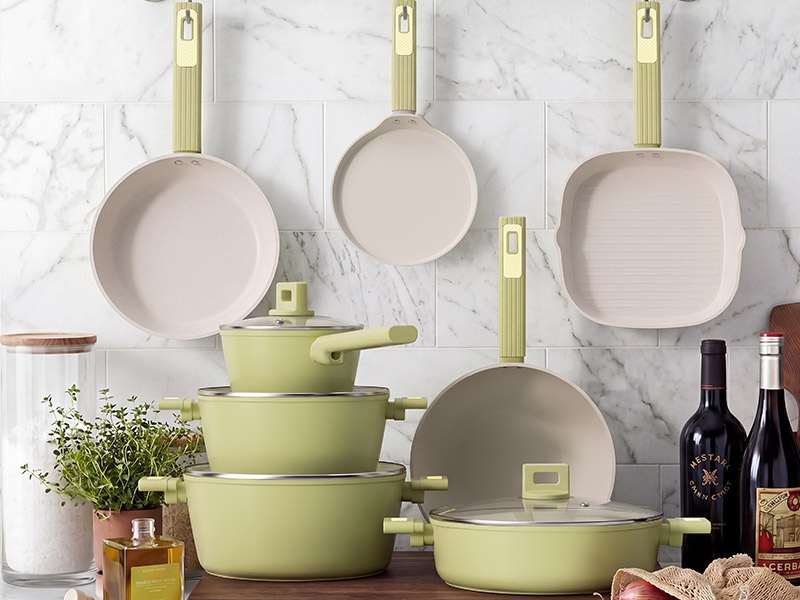
Lightweight Design for Everyday Handling
Heavy cookware can become inconvenient when users prepare meals frequently, move full pots, or clean several items after cooking. Aluminum offers a relatively lightweight material option for frying pans, saucepans, and stockpots. The final weight depends on the product's dimensions, wall thickness, handle design, and additional layers. For distributors, comparing these details across different models helps identify products that balance comfortable handling with the durability expected by their customers.
Matching Cookware to Cooking Methods
Not every pan is suitable for every cooking task. Shallow frying pans work well for eggs, vegetables, and quick meals, while deeper saucepans provide room for sauces, grains, and soups. Larger pots are useful for family cooking and foodservice preparation. When planning a product range, buyers should consider common local recipes and cooking habits instead of selecting items based on appearance alone. A well-organized collection can serve different needs without making the assortment unnecessarily complicated.
Surface Treatment and User Expectations
The surface finish influences how cookware looks, feels, and performs during daily use. Nonstick aluminum pans appeal to users who prefer easier food release and simpler cleanup, while other finishes may suit different cooking styles. Buyers should review coating specifications, recommended utensils, cleaning instructions, and applicable food-contact requirements. As manufacturers, we recognize that surface consistency is an important part of product evaluation, particularly when customers expect the same finish across multiple shipments.
Practical Details That Affect Customer Satisfaction
Small design decisions can influence whether users enjoy cooking with a product. During product development and sourcing, buyers should examine several practical features:
- Handle comfort: Check grip shape, attachment, and balance during normal use.
- Lid fit: Ensure lids sit securely and match the intended cooking application.
- Base construction: Review stability and compatibility with the cooking surfaces specified for the product.
- Cleaning access: Consider whether corners, joints, and surface textures are easy to maintain.
These checks help buyers assess the complete product rather than relying on promotional descriptions.
Packaging and Storage for Distribution
Cookware must also withstand handling between the factory, warehouse, retailer, and end customer. Suitable packaging helps protect surfaces from scratches and reduces movement during transportation. Nesting designs can also help retailers and distributors organize inventory, provided that the products are protected from direct contact damage. Before confirming an order, buyers should review packaging materials, set combinations, carton labeling, and storage requirements to ensure the arrangement fits their distribution process.
Quality Checks Before Bulk Orders
A product sample offers a useful starting point, but repeat orders require clear specifications and consistent inspection procedures. Buyers should confirm dimensions, product weight where relevant, coating appearance, handle assembly, lid fit, and packaging details. It is also helpful to agree on how defects will be identified and recorded before production begins. These measures create a shared quality reference for both parties and help reduce misunderstandings during delivery and replenishment.
Building a Cookware Range Around Real Needs
Successful cookware collections are built around how customers actually prepare food, store kitchen products, and maintain their purchases. Retailers may prioritize versatile household sets, while hospitality suppliers may need products designed for frequent handling and specific cooking routines. As an Aluminum Cookware manufacturer, we work with business buyers to discuss product configurations, finishes, and packaging requirements, helping them select practical solutions that align with their target markets and everyday cooking needs.


 中文简体
中文简体 Português

 Shentang Village, Baiyang Industrial Zone, Baiyang Town, Wuyi County, Jinhua City, Zhejiang Province, China
 +86-15869262626